

A few months ago, one of my relatives seriously started thinking about buying a small house instead of paying rent every single month. He had already spent almost 12 years living in rented homes, and honestly, the frustration was understandable. Every year the rent increased, advance payments became bigger, and shifting houses again and again started affecting the entire family.
The biggest problem wasn’t finding a house.
It was arranging enough money for ownership.
That’s why schemes like the Wazir-e-Azam Apna Ghar Program 2026 are getting attention from middle-class families across Pakistan. For many people, this is probably the first time they’re hearing about government-backed housing loans with longer repayment plans and lower markup rates compared to normal commercial financing.
But at the same time, there’s also confusion everywhere.
People are asking:
- Who can actually apply?
- How much installment will come monthly?
- Is the loan really affordable?
- What property size is allowed?
- Can salaried people qualify easily?
I spent time going through the details carefully, and honestly, there are a few things applicants should clearly understand before getting too excited.
What Is the Wazir-e-Azam Apna Ghar Program?
The Apna Ghar Program is a government-supported housing finance initiative launched to help low-income and middle-class families either:
- Build their own house
- Buy a house
- Construct on owned land
The idea sounds simple, but for many families in Pakistan, home ownership feels impossible because of:
- Rising property prices
- Expensive bank financing
- High rent expenses
- Short repayment periods
This scheme tries to reduce some of that pressure by offering easier financing terms through partner banks and housing finance institutions.
Why This Program Matters for Ordinary Families
Most people living in rented homes already understand this feeling.
You keep paying monthly rent for years, but at the end of the day, nothing belongs to you.
I know families paying Rs. 45,000 to Rs. 80,000 monthly rent in major cities while still struggling to save for property.
That’s why many people are now comparing:
| Renting | Home Financing |
|---|---|
| Monthly rent increases | Fixed installment planning |
| No ownership | Long-term ownership |
| Frequent shifting | Stable family environment |
| No asset building | Property investment |
Of course, financing still comes with responsibility, but at least the money goes toward your own home.
Loan Amount Under Apna Ghar Program 2026
One of the biggest attractions of the scheme is the financing limit.
Eligible applicants may apply for loans up to:
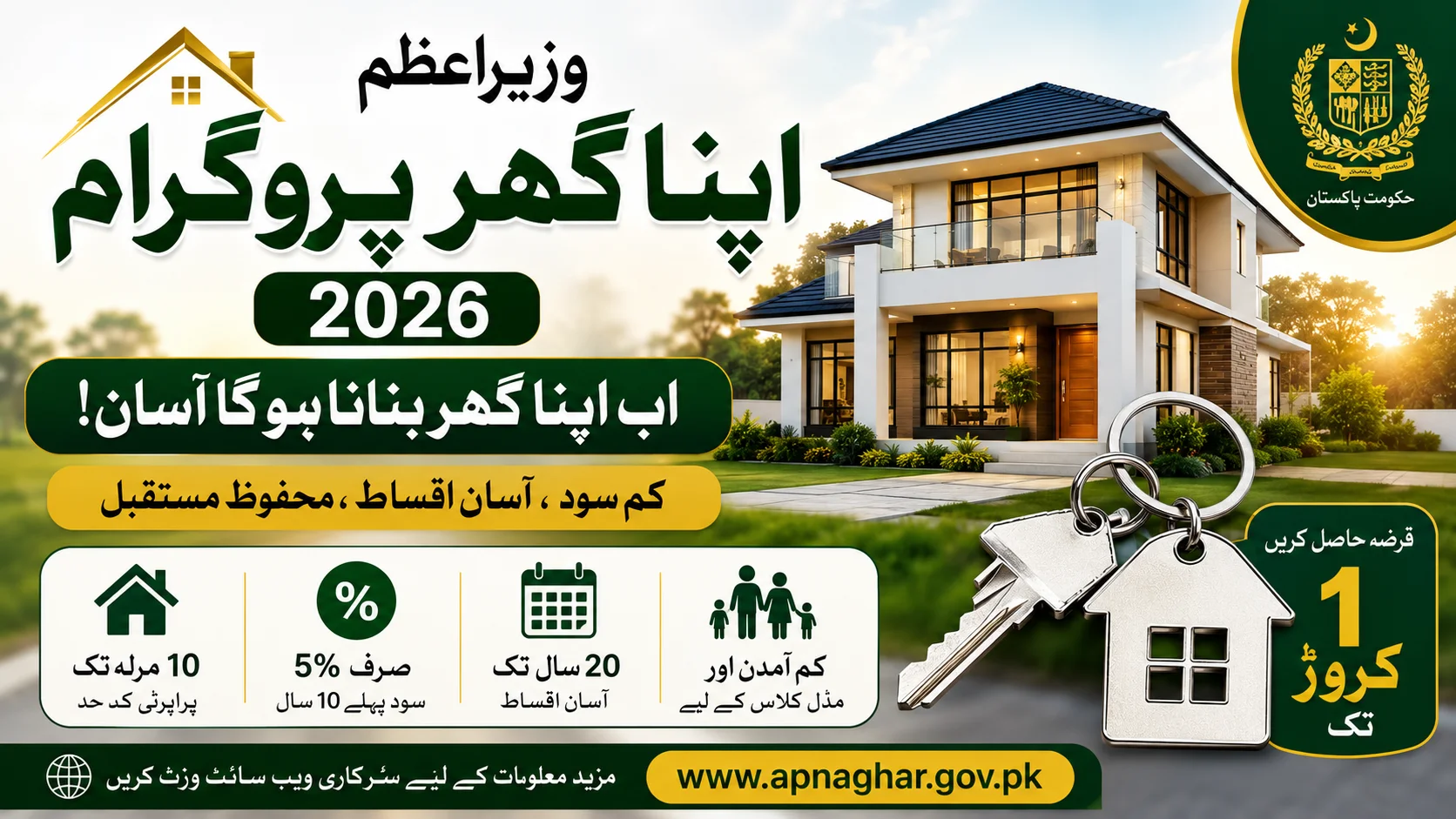
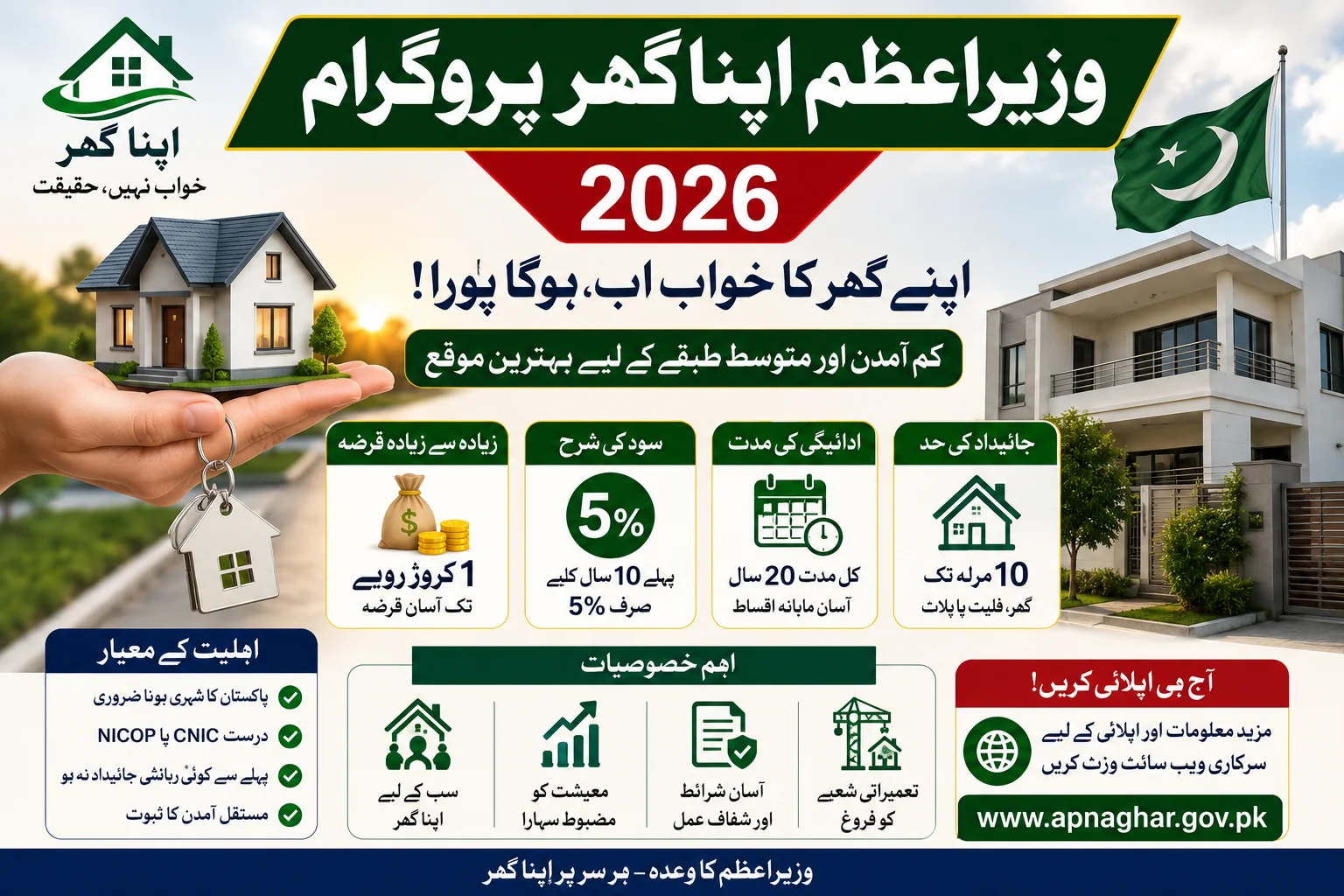
Rs. 10 Million (1 Crore)
That amount may help cover:
- House construction
- Flat purchase
- Small home purchase
- Construction on owned plots
But honestly, approval depends on several things including:
- Income level
- Repayment capacity
- Property verification
- Bank assessment
Many people assume everyone automatically gets the full amount, which usually isn’t how financing works.
Understanding the Installment Structure
This is probably the most important part people should calculate carefully before applying.
The government announced a lower markup structure during the first phase of repayment.
First 10 Years
The markup rate is expected to remain around:
5% subsidized financing
That’s significantly lower than many standard commercial loans.
Remaining 10 Years
After the first phase, financing may shift according to market-based rates depending on banking policies at that time.
This is something applicants should understand realistically instead of focusing only on the early low markup.
Why Lower Initial Installments Matter
For middle-income families, the first few years are usually financially difficult.
Expenses already include:
- School fees
- Utility bills
- Transportation
- Grocery inflation
- Medical costs
Smaller installments during the beginning can genuinely make adjustment easier.
One salaried person I know said the scheme became attractive mainly because the monthly repayment looked closer to what he already pays in rent.
Property Size Limits Explained
A lot of confusion exists around plot and house size eligibility.
The program generally focuses on modest residential properties instead of luxury housing.
Expected Property Limits
| Property Type | Approximate Limit |
|---|---|
| House plots | Up to 10 Marla |
| Flats/Apartments | Limited approved size |
This helps keep the scheme focused on ordinary residential needs rather than large commercial investments.
Who Can Apply for the Scheme?
From what I’ve understood, the program mainly targets first-time homeowners.
That means applicants usually should not already own residential property.
Basic Eligibility May Include
| Requirement | Details |
|---|---|
| Pakistani citizen | Required |
| Valid CNIC/NICOP | Mandatory |
| Stable income source | Important |
| Property ownership limitation | First home priority |
| Bank verification | Required |
Banks will still evaluate repayment ability carefully.
Documents Usually Required
One thing many people underestimate is documentation.
Incomplete paperwork delays housing applications badly.
Commonly Required Documents
- Original CNIC
- Salary slips or income proof
- Bank statements
- Property documents
- Utility bills
- Employment verification
- Tax information (if applicable)
Self-employed applicants may need additional business proof.
How the Application Process Usually Works
The process is expected to move through partner banks and housing finance institutions.
Step 1 – Select Participating Bank
Applicants may apply through approved banks connected with the scheme.
Step 2 – Submit Documents
Income and property verification starts here.
Step 3 – Financial Assessment
Banks review:
- Monthly income
- Existing loans
- Repayment capacity
- Credit history
Step 4 – Property Verification
The property itself may also require legal verification.
Step 5 – Approval and Disbursement
Approved financing is usually released in phases for construction cases.
Mistakes Many Applicants Make
I’ve personally seen people rush into financing discussions without proper planning.
That usually creates problems later.
Ignoring Total Monthly Costs
People calculate only installments while forgetting:
- Utility bills
- Maintenance
- Taxes
- Registration costs
Overestimating Income Stability
Housing financing works best with stable income planning.
Choosing Property Beyond Budget
Some families try to maximize loan size instead of staying within comfortable repayment range.
That becomes stressful long-term.
Not Reading Financing Terms Properly
Always understand:
- Markup structure
- Late payment charges
- Tenure conditions
- Insurance requirements
Can Overseas Pakistanis Apply?
Depending on banking rules and documentation, some overseas Pakistanis with valid NICOP may also qualify.
However, income verification requirements are usually stricter.
Will This Program Really Help the Housing Crisis?
Honestly, one scheme alone cannot solve Pakistan’s housing shortage completely.
But if financing remains transparent and accessible, it could genuinely help many middle-income families who are stuck between:
- Rising rents
- Expensive property prices
- Limited savings
Even partial support can create opportunities for people who otherwise may never qualify for traditional home financing.
FAQs
Can applicants buy flats under this scheme?
Yes, approved apartments and flats may qualify depending on financing rules.
Is the 5% markup fixed forever?
No. The lower subsidized rate mainly applies during the initial financing years.
Can self-employed people apply?
Yes, but income proof and bank verification become very important.
Do applicants need owned land already?
Not always. Some financing may support purchase plus construction depending on approval structure.
Can government employees apply?
Eligible salaried individuals may apply if they meet financing conditions.
How long is the repayment period?
The financing tenure may extend up to 20 years.
Final Thoughts
The Wazir-e-Azam Apna Ghar Program 2026 may become one of the more practical housing opportunities for middle-class and lower-income families if implemented properly through transparent banking systems.
From what I’ve personally seen, the families who benefit most from housing finance are usually the ones who plan carefully instead of chasing the biggest possible loan amount.
A smaller affordable home with manageable installments is often far better than taking financial pressure that becomes difficult to handle later.