
Last summer, one of my relatives in Lahore received an electricity bill that crossed Rs. 38,000. The surprising part was that they were already trying to save electricity — fans were switched off during the day, unnecessary lights stayed off, and the air conditioner was only used at night for a few hours.
Still, the bill kept climbing every month.
That’s the reality many families in Punjab are facing in 2026. Electricity costs have become one of the biggest monthly pressures for middle-class and lower-income households. People who used to manage bills comfortably are now seriously looking for alternatives like solar energy.
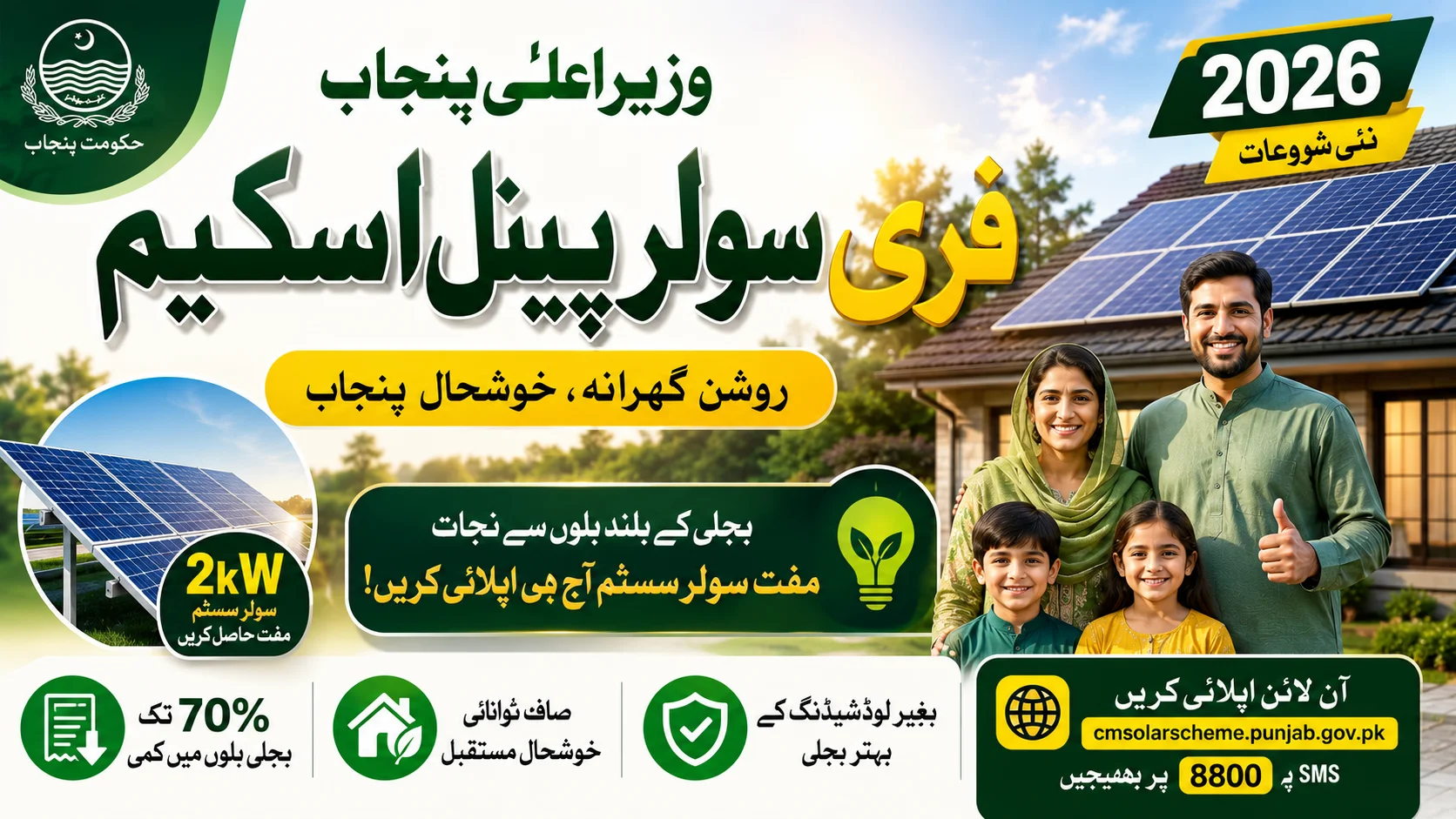
That’s why the CM Punjab Free Solar Panel Scheme 2026 has quickly become one of the most talked-about government programs this year.
The scheme promises free solar systems for eligible low-consumption households across Punjab, helping families reduce dependency on expensive electricity while also supporting cleaner energy use.
But honestly, many people are still confused about who can apply, how the process works, and whether the scheme is actually worth the effort.
After speaking with several applicants and checking the process carefully, here’s a practical breakdown in simple language.
What Is the CM Punjab Free Solar Panel Scheme 2026?
The program, sometimes called the Roshan Gharana Scheme, is a Punjab government initiative launched under CM Maryam Nawaz to support households struggling with rising electricity expenses.
The government plans to distribute around:
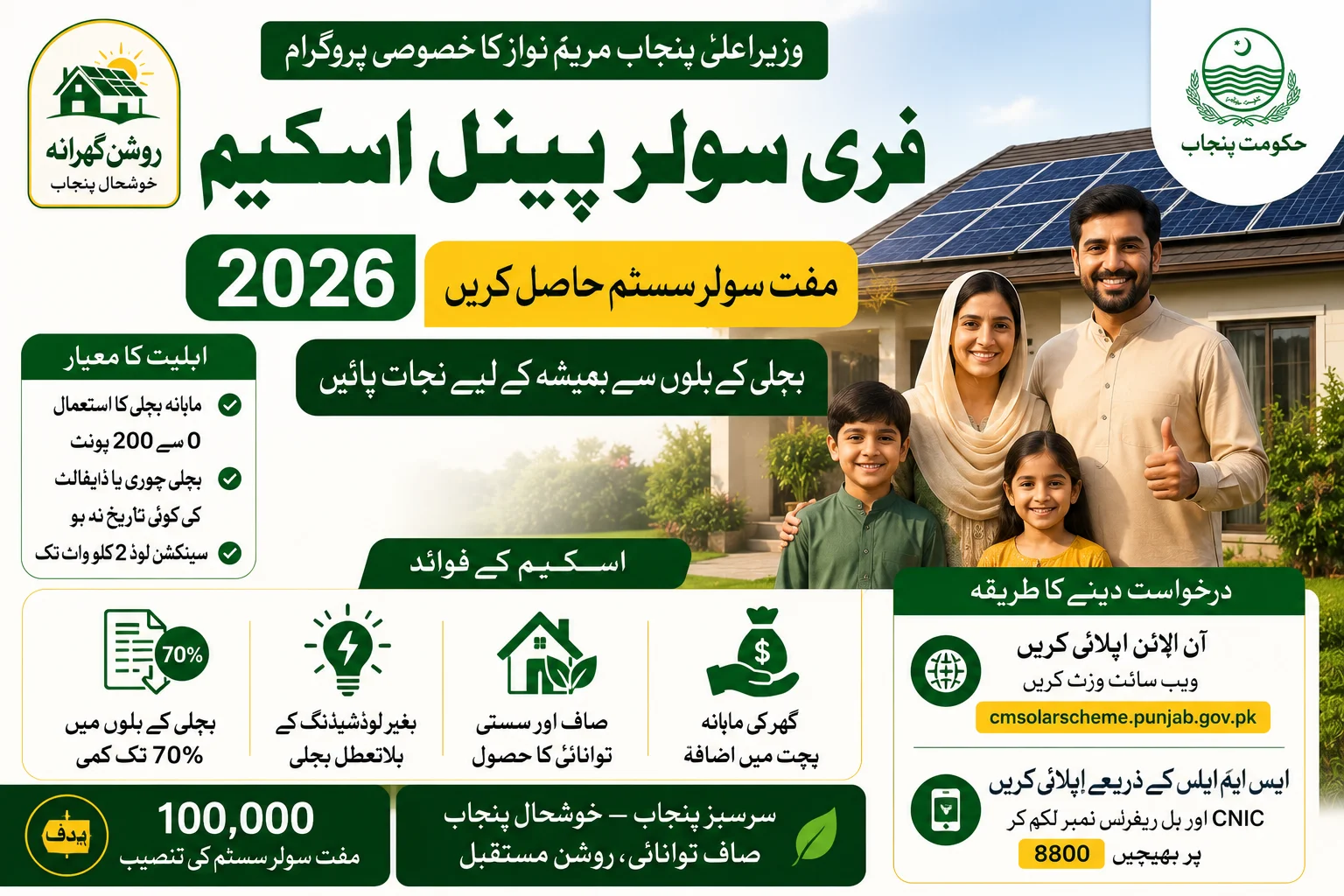
100,000 free solar systems
to eligible families consuming lower electricity units monthly.
The basic goal is simple:
- Reduce electricity bills
- Promote solar energy
- Support low-income households
- Decrease pressure on the power grid
For many families, even small monthly savings can make a huge difference now.
Who Is This Scheme Actually Designed For?
One thing people misunderstand is that this scheme mainly targets smaller electricity consumers, not households already using heavy electricity loads.
From what I’ve seen, the focus is mostly on families using:
0 to 200 electricity units monthly
This includes:
| Consumer Category | Approximate Usage |
|---|---|
| Lifeline consumers | Very low usage |
| Protected consumers | Up to 200 units |
| Low-income households | Lower monthly bills |
Families running multiple air conditioners or high electricity setups may not qualify.
What Kind of Solar System Is Being Offered?
The government plans to provide systems generally around:
Up to 2 KW capacity
For smaller households, that can help support:
- Fans
- Lights
- Mobile charging
- Basic appliances
- Some daytime electricity needs
Of course, total backup depends on household consumption habits.
Why People Are Interested in Solar Energy Now
A few years ago, many people thought solar systems were only for wealthy households.
That mindset has changed quickly.
Now even small homeowners are trying to install solar panels because electricity prices continue increasing while solar technology is becoming more common.
One family I know in Multan reduced their monthly bill from nearly Rs. 12,000 to under Rs. 4,000 after partial solar installation.
That kind of saving matters a lot right now.
How to Apply Online for CM Punjab Solar Panel Scheme 2026
The online process is fairly straightforward if your documents are ready beforehand.
Step 1 – Open Official Website
Applicants need to visit the official Punjab solar scheme portal.
Always double-check the website because fake registration links often circulate on Facebook and WhatsApp.
Step 2 – Create an Account
Usually, you’ll need:
- CNIC number
- Mobile number
- Basic personal details
Use an active mobile number because updates and verification messages may arrive there.
Step 3 – Enter Electricity Bill Information
This part is important because eligibility depends heavily on electricity usage records.
Applicants usually need:
- Electricity reference number
- Consumer details
- Recent bill information
One small mistake in bill numbers can delay verification.
Step 4 – Upload Required Documents
Normally, applicants may need:
| Document | Purpose |
|---|---|
| CNIC copy | Identity verification |
| Electricity bill | Usage confirmation |
| Mobile number | Communication |
Clear scanned copies help avoid rejection.
Step 5 – Submit Application
After submission, applicants usually receive:
- Tracking number
- Confirmation SMS
- Registration reference
Save screenshots because many people accidentally lose reference details later.
Alternative SMS Application Method
Some people, especially in rural areas, feel uncomfortable using websites.
For them, the SMS method is easier.
SMS Method
Send:
- CNIC number
- Bill reference number
to the official shortcode provided by the scheme.
The system usually replies with confirmation details.
Real-Life Example That Explains the Impact
One small shop owner I spoke to recently was selected in a local solar-related pilot program earlier this year.
Before solar installation:
- Monthly electricity bills were unpredictable
- Summer outages damaged business hours
- Fans and lights increased costs badly
After solar support:
- Daytime electricity dependence reduced
- Shop cooling became easier
- Monthly pressure became more manageable
This is exactly why so many families are now rushing toward solar solutions.
Biggest Benefits of the Scheme
Lower Monthly Bills
This is obviously the main reason people are applying.
Backup During Load Shedding
Even limited solar support helps during outages.
Long-Term Savings
Solar systems may continue helping for years after installation.
Cleaner Energy
Less dependence on fuel-based electricity supports environmental improvement too.
Common Mistakes Applicants Should Avoid
I’ve already seen people creating unnecessary problems during registration.
Entering Wrong Bill Reference Number
This is probably the most common mistake.
Applying Through Fake Agents
No agent can “guarantee” selection for money.
Uploading Blurry Documents
Unreadable files often create delays or rejection.
Ignoring Eligibility Rules
Some high-consumption households apply despite not meeting basic criteria.
That usually wastes time.
Will Everyone Get Selected?
Honestly, probably not.
The biggest challenge is limited availability.
With around 100,000 systems planned and millions of electricity consumers across Punjab, competition is naturally high.
Selection may depend on:
- Verification
- Eligibility
- Balloting process
- Consumption category
What Happens After Approval?
Selected applicants may go through:
- Physical verification
- Meter confirmation
- Site inspection
- Installation scheduling
This process can take time depending on district workload.
FAQs
Can tenants apply for the solar scheme?
This may depend on electricity meter ownership and verification rules.
Is the solar system completely free?
Eligible selected households may receive government-supported installation under the scheme.
Can people with more than 200 units apply?
The main focus currently remains on lower-consumption households.
How will applicants know if they are selected?
Usually through SMS alerts or official portal updates.
Can one household apply with multiple meters?
Multiple meter cases may face verification issues or disqualification.
How long does installation take after approval?
Timing depends on verification and district implementation speed.
Final Thoughts
The CM Punjab Free Solar Panel Scheme 2026 may become one of the most practical relief programs for lower-income families struggling with electricity bills in Punjab.
From what I’ve personally observed, interest in solar energy is no longer limited to wealthy homeowners. Ordinary families are now actively searching for ways to reduce monthly utility pressure, and schemes like this can genuinely help if implemented transparently and efficiently.
For applicants, the smartest approach is simple:
Apply early, provide correct information, and avoid fake agents promising shortcuts.