

A few years ago, one of my friends from South Punjab left the city and returned to his village after struggling to find stable work. He had a small piece of family land, but honestly, he didn’t know much about modern farming. Like many young people, he thought agriculture only meant traditional wheat farming with very little profit.
Things changed when he attended a local agriculture training session and started learning about vegetable farming, drip irrigation, and seasonal crop planning. What surprised him most was that many government schemes actually existed to support small farmers — but most people either never hear about them properly or assume the process is too difficult.
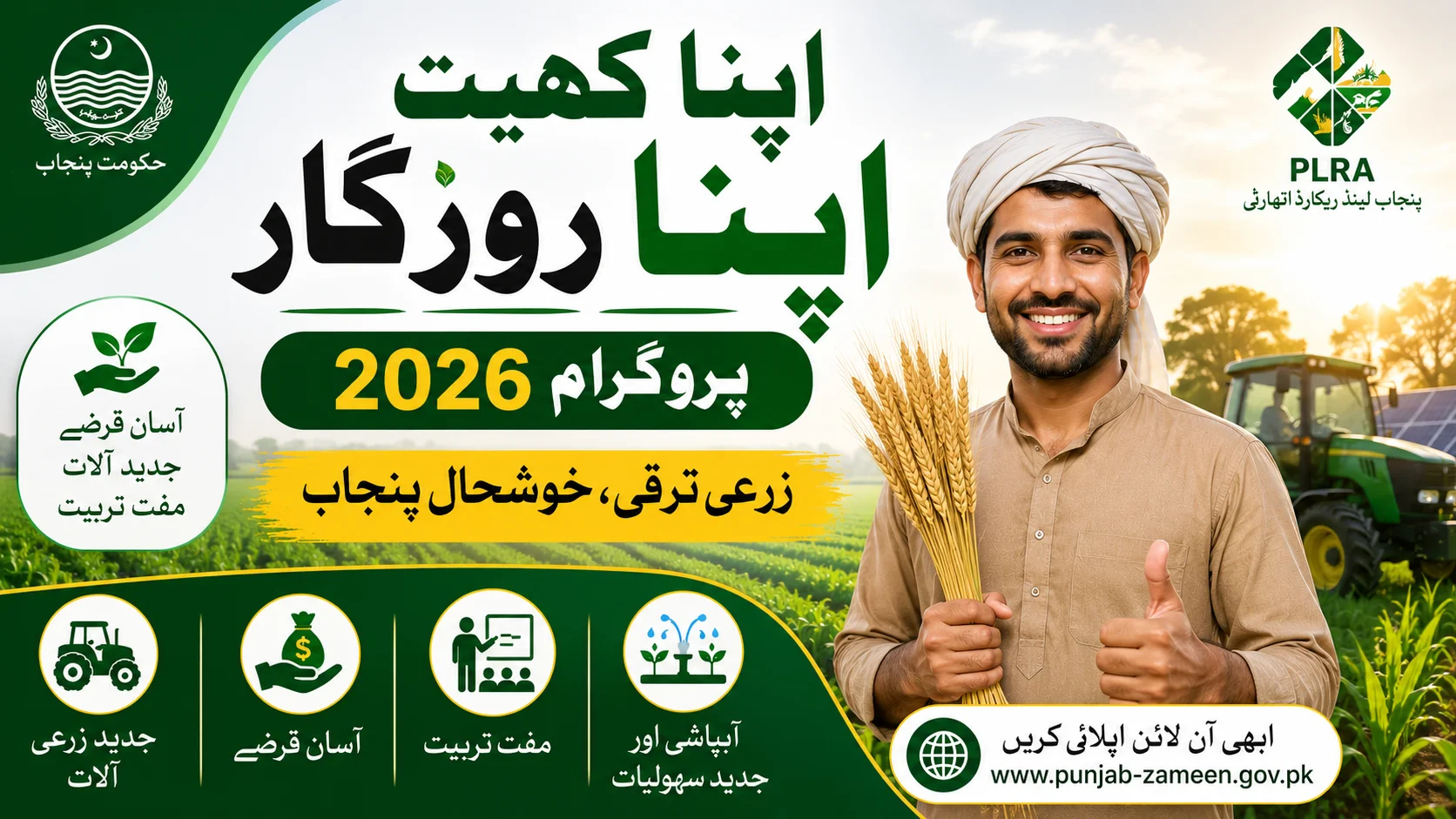
That’s why the Apna Khet Apna Rozgar Program 2026 is getting attention across Punjab right now. The scheme is aimed at helping unemployed youth and low-income farmers start or improve agricultural work with financial support, farming equipment, and practical training opportunities.
If you’re someone interested in farming but confused about where to start, this guide explains the program in simple words without the usual government jargon.
What Is the Apna Khet Apna Rozgar Program?
The Apna Khet Apna Rozgar initiative is a Punjab government-supported agriculture and self-employment scheme linked with land and farming development systems.
The basic idea behind the program is simple:
Help people earn through agriculture instead of depending only on limited job opportunities.
Many educated young people in villages already have access to land or farming experience through their families, but they lack:
- Money to start
- Modern farming knowledge
- Equipment access
- Business planning support
This scheme tries to bridge that gap.
Why This Program Matters in 2026
Farming in Punjab is changing quickly.
Older methods still work for some crops, but rising diesel prices, water shortages, fertilizer costs, and market competition have made traditional farming difficult for small landowners.
At the same time, unemployment among rural youth continues to grow.
Programs like Apna Khet Apna Rozgar matter because they focus on:
| Challenge | Possible Support |
|---|---|
| Unemployment | Self-employment opportunities |
| Outdated farming methods | Modern training |
| Low crop productivity | Better tools and planning |
| Financial limitations | Easier financing options |
Instead of only offering short-term aid, the idea is to help people generate long-term income.
Who Can Apply for the Scheme?
From what I’ve seen, many people assume only large landowners qualify. That’s not really true.
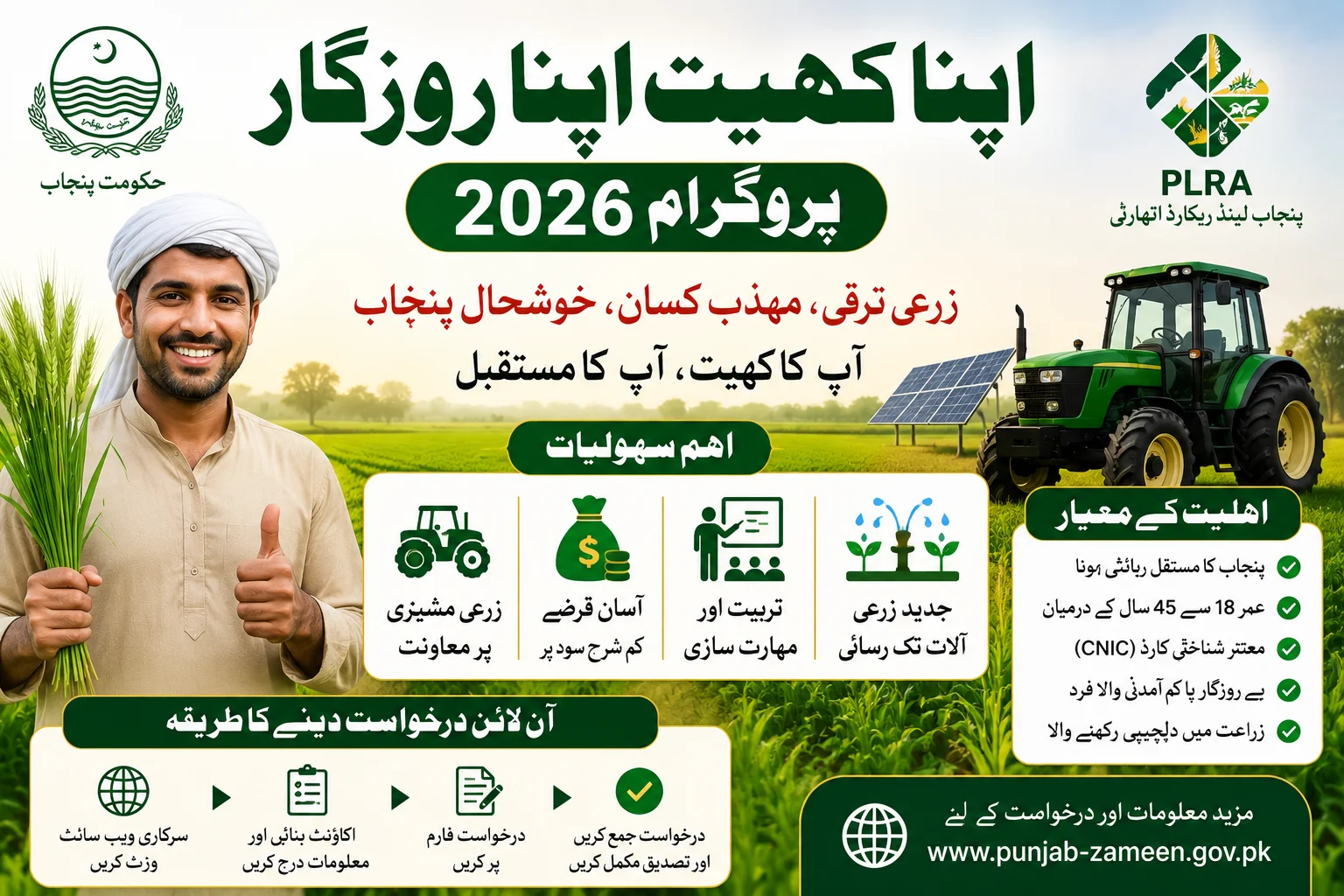
The scheme mainly targets:
- Small farmers
- Rural youth
- Unemployed individuals
- Low-income households
- People interested in agriculture businesses
Basic Eligibility Requirements
| Requirement | Details |
|---|---|
| Punjab residency | Mandatory |
| Valid CNIC | Required |
| Age limit | Usually young to middle-age applicants |
| Interest in agriculture | Important |
| Basic financial need | Preferred |
Some districts may apply additional verification rules depending on local implementation.
What Kind of Support Can Applicants Receive?
This is where many people get confused.
The program is not simply “free money.” In most cases, support may come in different forms depending on the applicant’s agricultural plan.
Agricultural Loan Support
Some applicants may qualify for easier financing to start small farming projects.
This can help with:
- Seed purchases
- Fertilizer costs
- Tunnel farming setup
- Livestock support
- Irrigation systems
One important thing people should understand is that proper planning matters. Authorities usually prefer applicants who actually understand what they want to grow or manage.
Modern Farming Equipment
In many villages, outdated tools still reduce productivity badly.
Support programs may help farmers access:
- Tractors
- Water pumps
- Spray machines
- Drip irrigation systems
- Solar irrigation support
Even small upgrades can make a huge difference in crop output.
Agriculture Training and Skill Development
Honestly, this may be the most valuable part of the scheme.
I’ve personally seen farmers lose money simply because they followed old crop practices without understanding soil conditions or market demand.
Training sessions often include:
- Smart farming methods
- Water-saving techniques
- Seasonal crop planning
- Pest management
- Kitchen gardening
- Livestock care
Knowledge alone can sometimes improve farming income without increasing land size.
Step-by-Step Online Application Process
The online process is simpler now compared to older government schemes.
Step 1 – Visit the Official Portal
Open the official Punjab land or agriculture-related government website connected with the scheme.
Always use official portals only.
Fake registration pages often appear on social media during popular schemes.
Step 2 – Create Your Account
Usually, you’ll need:
- CNIC number
- Mobile number
- Basic personal information
Use an active mobile number because updates may arrive through SMS.
Step 3 – Fill the Application Form Carefully
This part matters more than people think.
You may need to explain:
- Farming experience
- Land details
- Type of support needed
- Agricultural plan
One mistake many applicants make is submitting vague information like “I want to do farming.”
A clearer plan usually looks more serious.
For example:
“I want to start seasonal vegetable farming on 3 acres using drip irrigation.”
That sounds much more practical.
Step 4 – Upload Required Documents
Common documents may include:
| Document | Purpose |
|---|---|
| CNIC copy | Identity verification |
| Domicile | Punjab residency |
| Income proof | Financial assessment |
| Land information | Farming verification |
Make sure uploaded images are clear.
Blurry files often delay applications.
Step 5 – Wait for Verification
Authorities may contact selected applicants for further verification or interviews.
This stage can take time depending on application volume.
Common Mistakes Applicants Should Avoid
I’ve seen many people lose opportunities due to avoidable errors.
Applying Without a Farming Plan
A serious agriculture proposal improves credibility.
Using Someone Else’s Mobile Number
This creates problems later during verification.
Ignoring Training Opportunities
Some people focus only on financial support and skip training sessions completely.
That’s honestly a mistake because practical farming knowledge matters more long-term.
Trusting Fake Agents
No agent can “guarantee selection” for money.
Government registration processes should always remain official.
Realistic Expectations From the Program
One thing people should understand clearly:
No government scheme can magically make someone successful overnight.
Agriculture still requires:
- Hard work
- Patience
- Crop planning
- Market understanding
- Weather management
But proper support can definitely reduce the struggle many new farmers face initially.
How This Scheme Could Help Rural Punjab
If implemented properly, programs like this can help rural areas in several ways:
| Impact Area | Possible Benefit |
|---|---|
| Youth employment | Reduced migration to cities |
| Agriculture production | Better crop output |
| Small farmers | Financial support |
| Rural economy | Increased local business |
Punjab’s economy already depends heavily on agriculture, so improving small farming businesses can create wider economic benefits too.
FAQs
Can people without agricultural land apply?
Some programs may support leased land or agriculture-related business ideas too.
Is the loan completely free?
Terms may vary depending on the support category and financing structure.
Can women apply for the program?
Yes, women involved in agriculture or rural businesses may also qualify.
How long does verification take?
Processing time depends on district workload and document verification.
Is online registration mandatory?
Most modern applications are shifting toward online systems, though some districts may offer offline guidance too.
Final Thoughts
The Apna Khet Apna Rozgar Program 2026 could become a useful opportunity for many young people in Punjab who want to build income through agriculture instead of waiting endlessly for limited government or private jobs.
From what I’ve personally observed, the applicants who benefit most from these schemes are usually the ones who come prepared — with realistic farming plans, willingness to learn, and patience to work consistently.
Agriculture today is no longer only about traditional crop growing. With better training, smarter techniques, and proper planning, even small farmers can gradually build stable livelihoods over time.